Ditapis dengan

Foundations of Materials Science and Engineering 7th ed
To prepare materials engineers and scientists of the future, Foundations of Materials Science and Engineering is designed to present diverse topics in the field with appropriate breadth and depth. The strength of the book is in its focus on key concepts in science of materials (basic knowledge) followed by application of scientific principles in selection and engineering of materials (applied k…
- Edisi
- 7
- ISBN/ISSN
- 9781260597707
- Deskripsi Fisik
- xviii, 1114 hal. ; 23 cm
- Judul Seri
- -
- No. Panggil
- 620.112 SMI f

Advanced Materials: An Introduction to Modern Materials Science
This book provides a thorough introduction to the essential topics in modern materials science. It brings together the spectrum of materials science topics, spanning inorganic and organic materials, nanomaterials, biomaterials, and alloys within a single cohesive and comprehensive resource. Synthesis and processing techniques, structural and crystallographic configurations, properties, classifi…
- Edisi
- 1
- ISBN/ISSN
- 9783030803612
- Deskripsi Fisik
- xxiii, 747 hal. ; 27,5 cm
- Judul Seri
- -
- No. Panggil
- 620.112 BEH a
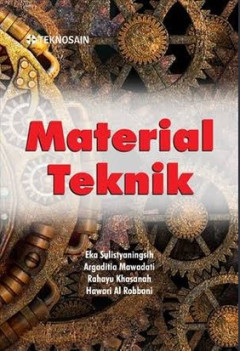
Material Teknik
- Edisi
- 1
- ISBN/ISSN
- 978-6238075256
- Deskripsi Fisik
- -
- Judul Seri
- -
- No. Panggil
- 620.11 MAT m
- Edisi
- 1
- ISBN/ISSN
- 978-6238075256
- Deskripsi Fisik
- -
- Judul Seri
- -
- No. Panggil
- 620.11 MAT m
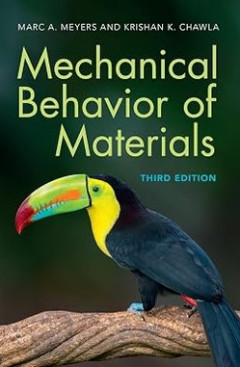
Mechanical Behavior of Materials 3rd ed
Fully revised and updated, the new edition of this classic textbook places a stronger emphasis on real-world test data and trains students in practical materials applications; introduces new testing techniques such as micropillar compression and electron back scatted diffraction; and presents new coverage of biomaterials, electronic materials, and cellular materials alongside established covera…
- Edisi
- 3
- ISBN/ISSN
- 978-1108837903
- Deskripsi Fisik
- -
- Judul Seri
- -
- No. Panggil
- 620.112 MEY m
Materials Chemistry 4th ed
- Edisi
- 4
- ISBN/ISSN
- 9783031187834
- Deskripsi Fisik
- ix, 902 hal. ; 24 cm
- Judul Seri
- -
- No. Panggil
- 620.11 FAH m
- Edisi
- 4
- ISBN/ISSN
- 9783031187834
- Deskripsi Fisik
- ix, 902 hal. ; 24 cm
- Judul Seri
- -
- No. Panggil
- 620.11 FAH m
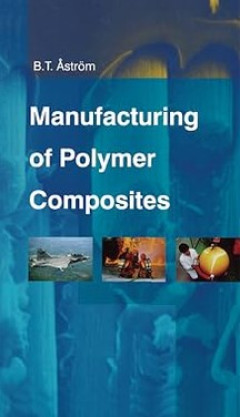
Manufacturing of Polymer Composites
The potential application areas for polymer composites are vast. While techniques and methodologies for composites design are relatively well established, the knowledge and understanding of post-design issues lag far behind. This leads to designs and eventually composites with disappointing properties and unnecessarily high cost, thus impeding a wider industrial acceptance of polymer composites…
- Edisi
- 1
- ISBN/ISSN
- 978-1138459588
- Deskripsi Fisik
- xxi, 469 hal. ; 24 cm
- Judul Seri
- -
- No. Panggil
- 668.416 AST m

Composite Materials: Applications in Engineering, Biomedicine and Food Science
Composite materials are formed when the combination of separate materials acquire new properties distinct from its components. They have a range of applications in fields such as mechanical and electrical engineering, food science and biomedicine and represent a fast-growing area of research. Composite Materials: Applications in Engineering, Biomedicine and Food Science provides an overview …
- Edisi
- -
- ISBN/ISSN
- 9783030454883
- Deskripsi Fisik
- xi, 484 hal. ; 24 cm
- Judul Seri
- -
- No. Panggil
- 620.118 SHA c

The Science and Engineering of Materials 8th ed
- Edisi
- 8
- ISBN/ISSN
- 9798214011868
- Deskripsi Fisik
- xxi, 921 hal. ; 28 cm
- Judul Seri
- -
- No. Panggil
- 620.112 ASK t
- Edisi
- 8
- ISBN/ISSN
- 9798214011868
- Deskripsi Fisik
- xxi, 921 hal. ; 28 cm
- Judul Seri
- -
- No. Panggil
- 620.112 ASK t

Light Metals 2025 (The Minerals, Metals & Materials Series)
- Edisi
- 1
- ISBN/ISSN
- 978-3031806759
- Deskripsi Fisik
- xxviii, 1360 hal. ; 28 cm
- Judul Seri
- -
- No. Panggil
- 669.72 EDW l
- Edisi
- 1
- ISBN/ISSN
- 978-3031806759
- Deskripsi Fisik
- xxviii, 1360 hal. ; 28 cm
- Judul Seri
- -
- No. Panggil
- 669.72 EDW l

Structural Composite Materials: Fabrication, Properties, Applications and Cha…
- Edisi
- 1
- ISBN/ISSN
- 978-9819959846
- Deskripsi Fisik
- -
- Judul Seri
- -
- No. Panggil
- 620.118 STR s
- Edisi
- 1
- ISBN/ISSN
- 978-9819959846
- Deskripsi Fisik
- -
- Judul Seri
- -
- No. Panggil
- 620.118 STR s
 Karya Umum
 Filsafat
 Agama
 Ilmu-ilmu Sosial
 Bahasa
 Ilmu-ilmu Murni
 Ilmu-ilmu Terapan
 Kesenian, Hiburan, dan Olahraga
 Kesusastraan
 Geografi dan Sejarah